fjuja: Definition
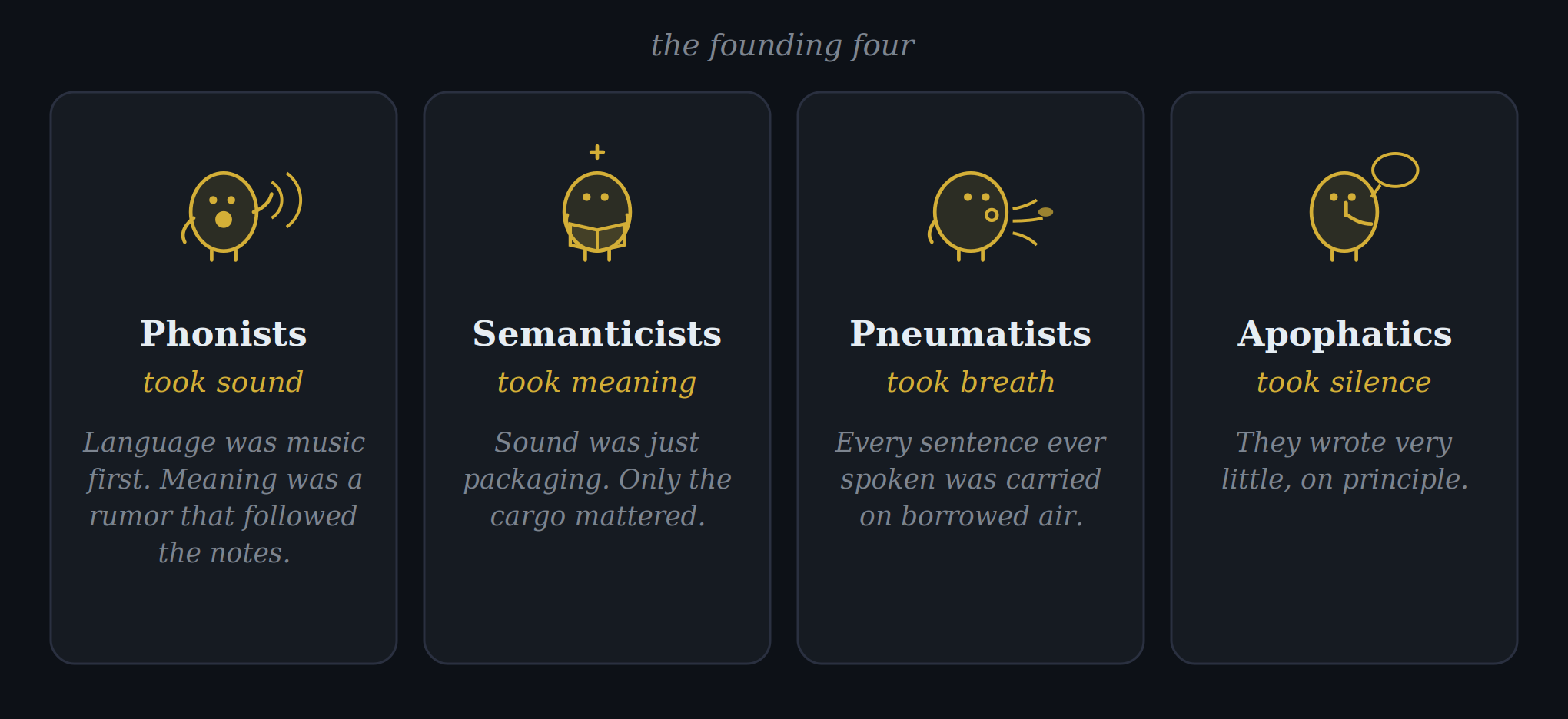
Fable has it that the four schools of ancient grammar each claimed a quarter of language.
The Phonists took sound. To them, language was music first. Meaning was a rumor that followed the notes.
The Semanticists took meaning. Sound was just packaging. Only the cargo mattered.
The Pneumatists took breath. No lungs, no language. Every sentence ever spoken, they liked to point out, was carried on borrowed air.
The Apophatics took silence. The pause before the answer, the things left unsaid. They wrote very little, on principle.
Over the centuries, new schools arrived to claim what the founders had missed.
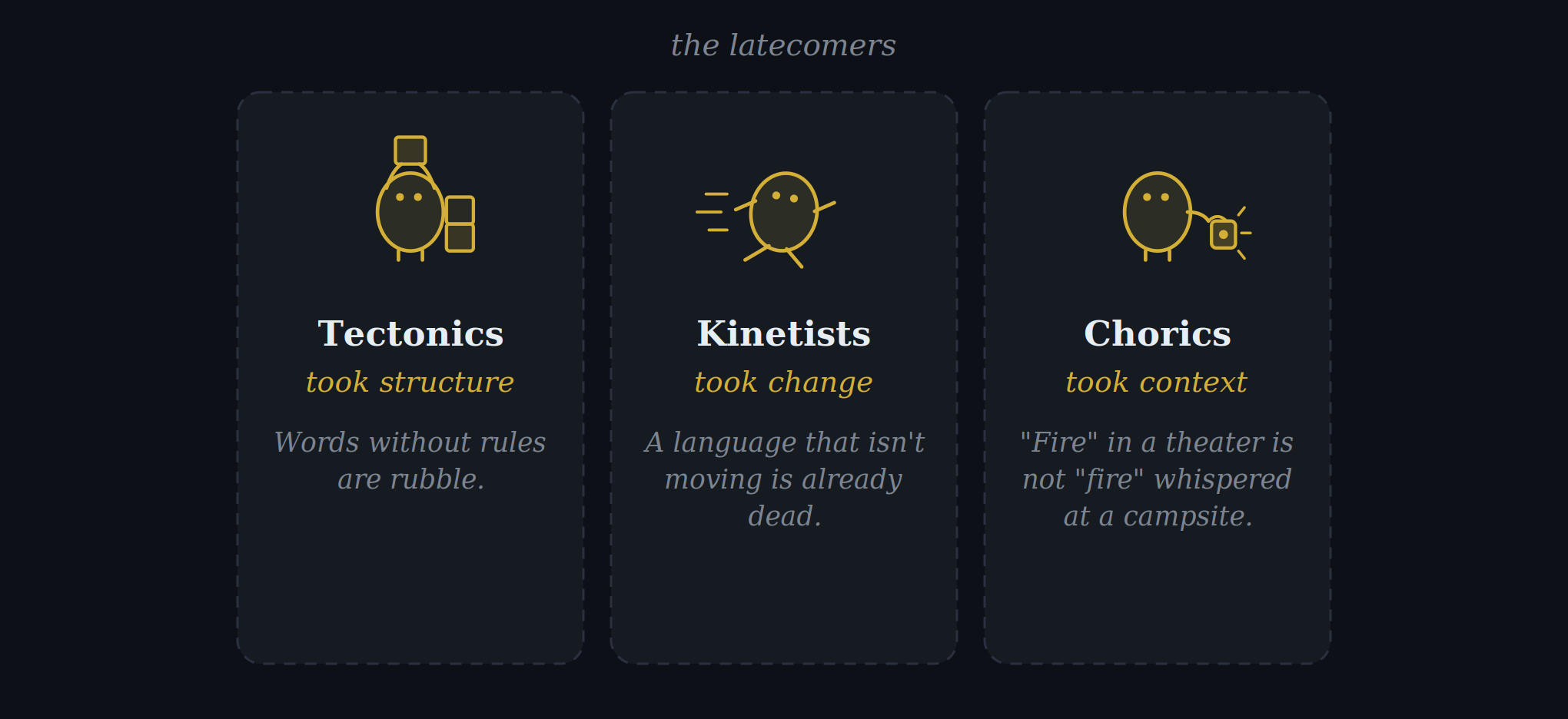
The Tectonics took structure, arguing that words without rules are rubble.
The Kinetists took change, insisting that a language that isn't moving is already dead.
The Chorics took context, for "fire" shouted in a theater is not "fire" whispered at a campsite.
Each arrival made the map of language more complete, and the quarrel worse. The schools met once a generation to settle which part was supreme, and for three hundred years the councils ended the same way: in shouting, in walkouts, in footnotes attacking other footnotes.

Then, at the final council, a junior scribe asked the question that ended them all: when a sentence is perfect, which of you made it so?
None could answer.
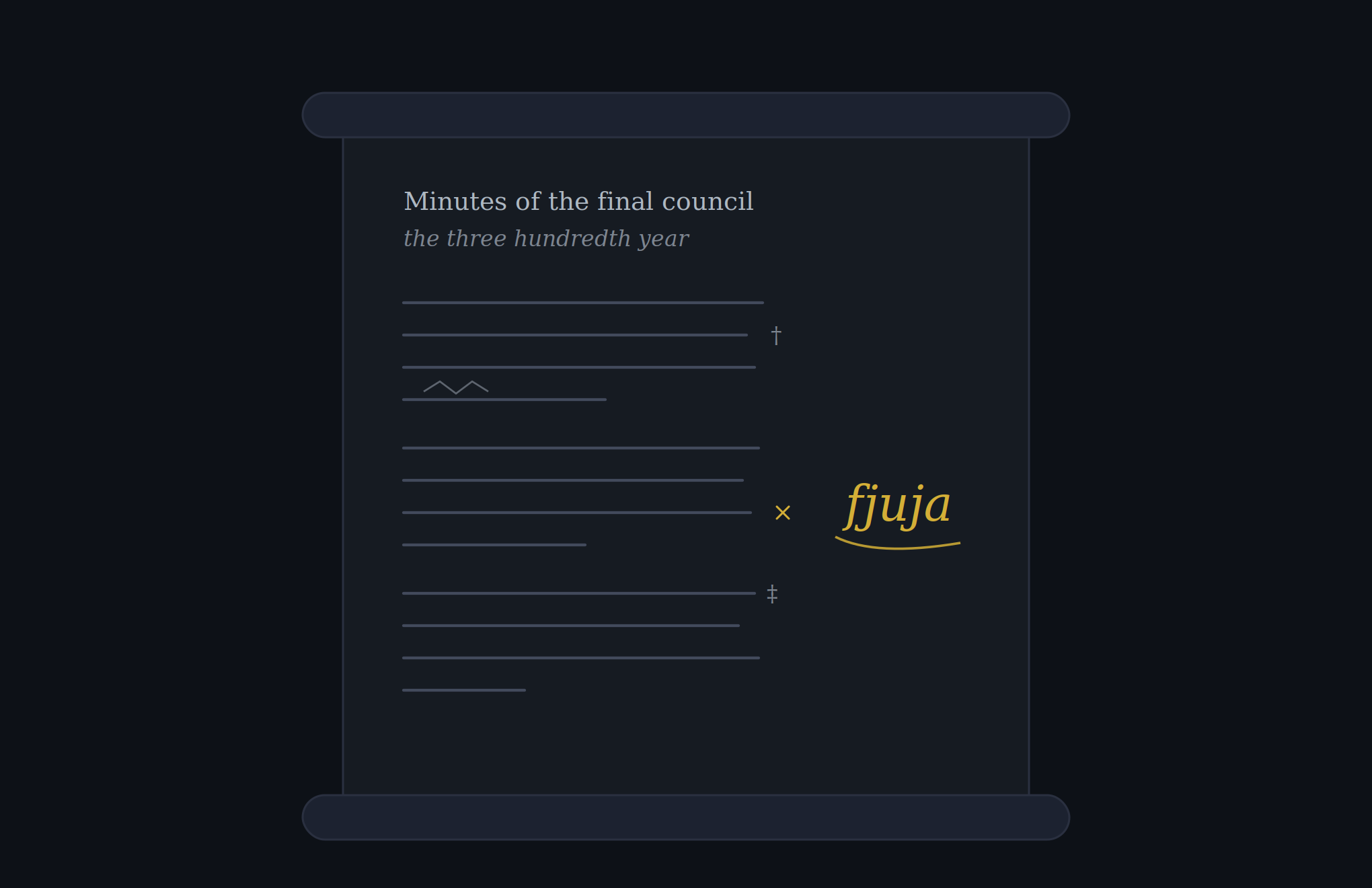
The minutes of that meeting record only one word, scrawled in the margin by an unknown hand: fjuja.
So, fjuja has no definition. Because the moment you define it, it becomes another school's territory.
The schools dissolved. But the word remained.
Every test on this site is chasing the same thing: the gap between technically correct and actually good.